
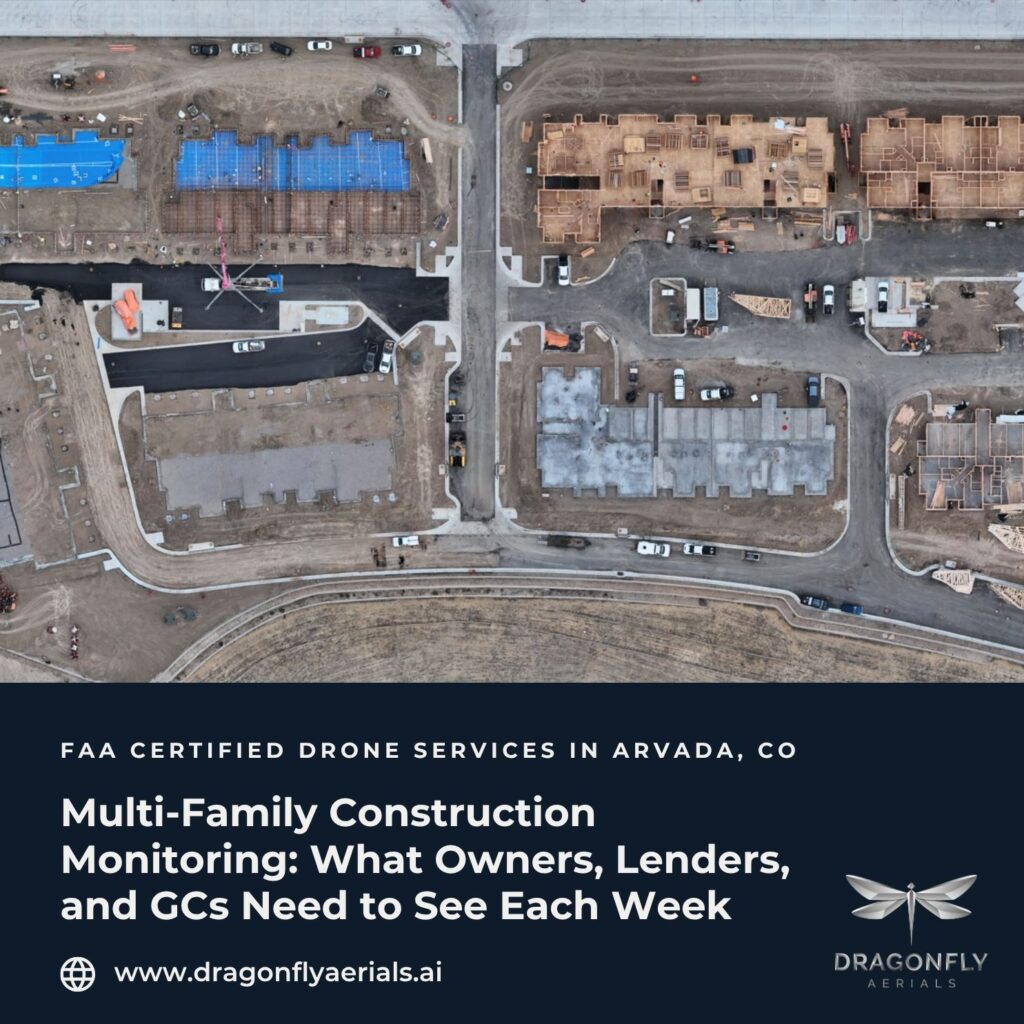
Multi-family projects carry a documentation burden that single-family work rarely does. A mid-rise apartment build in the Denver metro answers to an owner, one or more lenders, a general contractor managing a dozen subcontractors, and often a city inspector tracking a phased certificate of occupancy. Each of those parties needs to know the same thing at different levels of detail: where the project actually stands this week, and whether it matches the schedule everyone agreed to. When that information lives only in a superintendent’s head or in a folder of phone photos, small gaps in visibility turn into large disputes at draw time.
The scale of the sector is part of the reason the stakes keep rising. U.S. Census Bureau data shows multi-family construction spending holding up better than single-family through the first half of 2026, running modestly ahead of the prior year even as single-family pulled back. Steady volume means more capital tied to projects that need consistent oversight, and more lenders releasing funds against reported progress rather than a walk of the site.
The problem this creates
The core issue on a multi-family site is that progress is hard to see from the ground. A framed podium level looks complete from the parking lot while the deck above it is still open. Stored materials read as “installed” in a status meeting when they are actually staged and waiting. And because the site changes daily, a photo taken on the 3rd tells you little about where things stood on the 17th, when the draw request was submitted.
That visibility gap has a measurable cost. Rework is one of the clearest examples. The American Society of Civil Engineers, citing Construction Industry Institute research, reports that direct field rework averages around 5 percent of total project cost, with indirect effects pushing the real figure higher. Much of that rework traces back to work that proceeded past a problem no one documented in time. On a multi-family build, an out-of-sequence trade on level two repeats across every level above it.
Where regular aerial monitoring fits
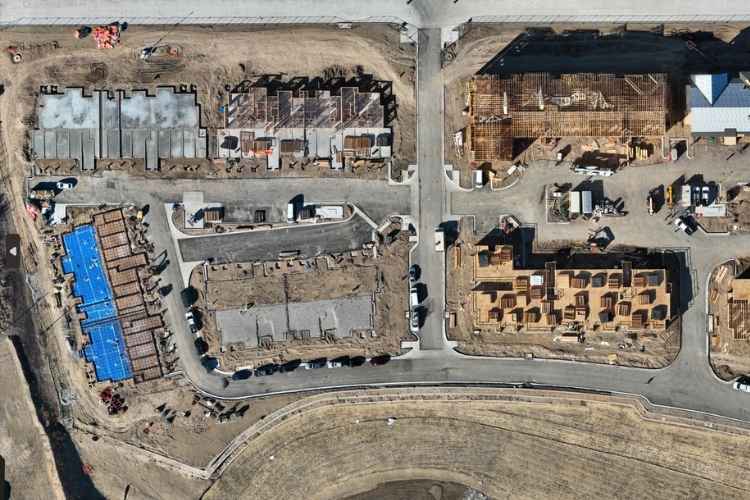
Multi-family construction monitoring by drone addresses the visibility problem directly, because the vantage point matches the shape of the problem. From above, an open deck, a staged material laydown, and a completed podium are all plainly distinguishable. A weekly overhead pass produces a dated, consistent record of the whole footprint rather than a scattering of ground-level angles.
As an FAA Part 107 certified operator based in Arvada and serving the Colorado Front Range, Dragonfly flies these sites on a set cadence and delivers a documented record within 2 to 5 business days. The value is less in any single flight than in the sequence: week over week, the same site flown from the same positions builds a timeline that anyone can read without being on site. Our Construction Progress Documentation service is built around that rhythm.
For the general contractor, that record is a scheduling and coordination tool. For the owner, it is independent confirmation that the money is buying the building that was promised. For the lender, a dated aerial set attached to a draw package answers the “is it really there” question without a site visit. The industry has been moving this direction for a reason: owners want evidence, lenders want visibility, and consistent documentation supplies both without adding friction to the field crew’s day.
What a monitoring program should include
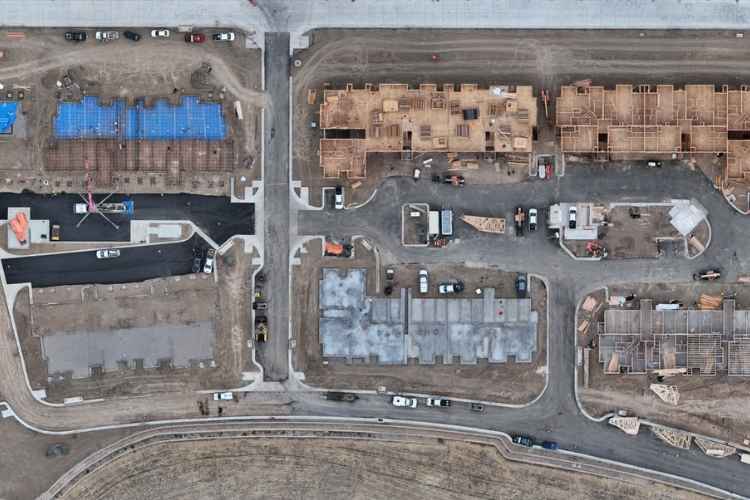
A monitoring program worth paying for is defined by consistency, not by any one deliverable. On a multi-family project, that means:
- A fixed flight cadence agreed to at the start
- Repeatable camera positions so this week compares cleanly to last week
- Dated high-resolution imagery covering the full site and each elevation
- A predictable turnaround so the documentation is current when draw and coordination meetings happen
Because our workflow is standardized, the person reviewing the images does not have to relearn the site each week; the sequence does the explaining. You can see how that process runs start to finish on our How It Works page.
Just as important is what a monitoring program should not claim. Aerial documentation is a record of observable, exterior conditions. It does not replace inspection inside finished walls or certify structural work that has been covered. Used honestly, it is a dependable layer of visibility that complements, rather than substitutes for, the inspections a multi-family project already requires.
The takeaway for Front Range projects
Multi-family construction rewards teams that can prove where a project stands at any point in its schedule. As spending in the sector stays steady and lenders keep a close eye on draws, a documented weekly record is becoming a practical expectation rather than a nice-to-have. A consistent aerial monitoring program is one straightforward way to meet it.
If you are managing a multi-family project along the Colorado Front Range and want a reliable weekly record, you can request a quote or review the full range of services we offer.