
A wall looks finished long before it is. Once the cladding is on, the membrane is covered, and the insulation is hidden behind drywall, the parts of a building most likely to cause trouble later are exactly the parts no one can see. Trapped moisture, a gap in the insulation, a section of membrane that never fully bonded: none of these announces themselves at a walkthrough. They show up two winters later as a stain on a ceiling, a cold room nobody can keep warm, or a callback that turns into a claim. By then, the cost of finding the problem has multiplied, because everything that was installed over it has to come back off.
This is the problem that has pushed thermal imaging from a specialty service toward a routine part of construction quality control, and it is a trend worth understanding rather than dismissing.
What thermal imaging sees that the eye cannot
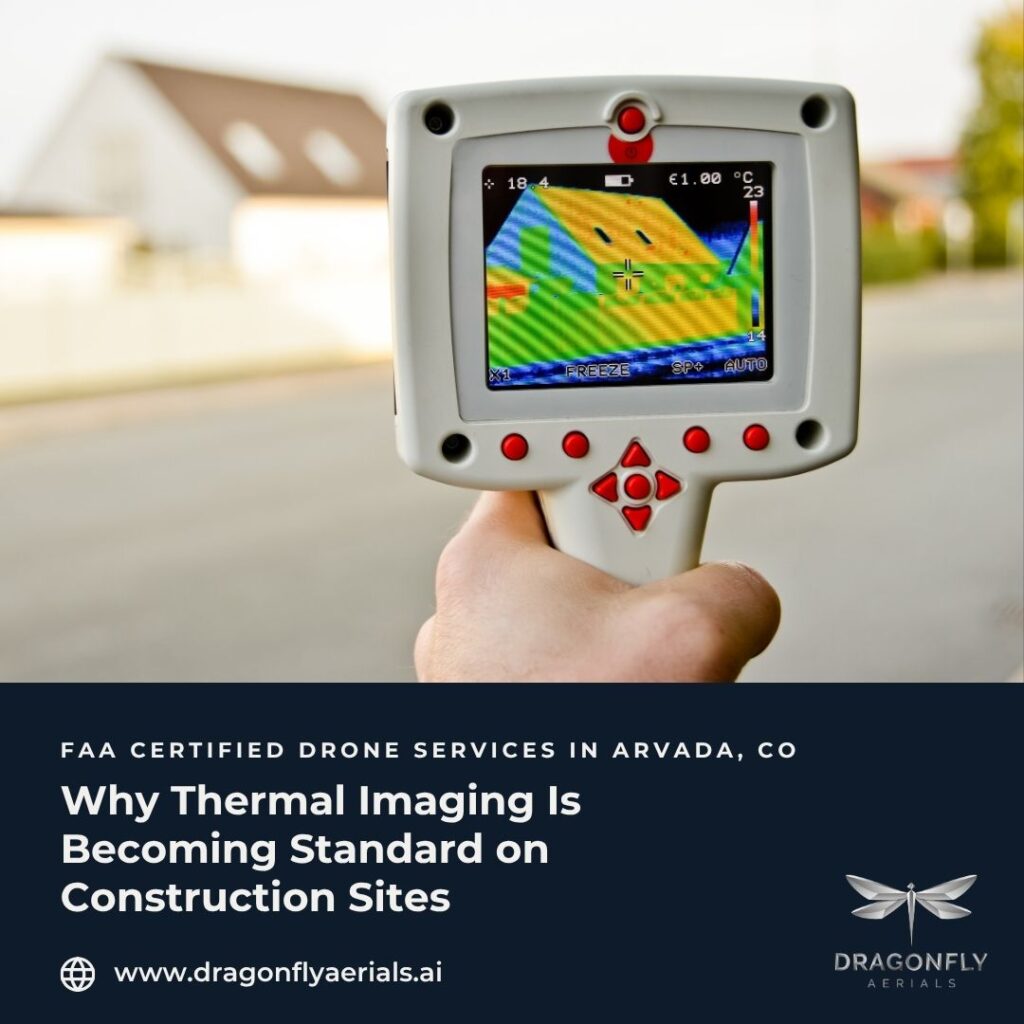
A thermal, or infrared, camera does not photograph light. It measures the heat radiating from a surface and renders temperature differences as an image. That distinction is what makes it useful on a construction site. Materials hold and release heat at different rates depending on their condition. Wet insulation stays warm after the sun goes down while the dry material around it cools. A void where insulation is missing lets interior heat bleed through to the exterior face. A failing electrical connection runs hotter than the cables feeding it. None of these conditions is visible to the eye, but each one leaves a clear thermal signature (Anvil Labs).
Mounted on a drone, a thermal camera covers ground that a person on a ladder cannot. A roof, a full building envelope, or a row of rooftop equipment can be surveyed from the air in a single flight, without scaffolding, lifts, or anyone stepping onto a wet membrane. For a multi-story facade or a large low-slope roof, that combination of reach and speed is the reason aerial thermal work has caught on.
Why the timing of a scan matters
Thermal imaging is not a point-and-shoot exercise, and that is worth being honest about. The image only shows useful information when there is a temperature difference driving it. For roof moisture, the established practice is to fly after the roof has absorbed several hours of sun and then begun to cool in the early evening; the wet areas hold their heat and glow against the cooler dry membrane. For building envelope and insulation work, the strongest results come when there is a meaningful difference between indoor and outdoor temperatures, which, along the Front Range, usually means the heating season. A scan flown at the wrong time of day, or with no thermal load on the assembly, can read as uniform even when problems are present. Knowing when to fly is as much a part of the service as knowing how.
Where it fits in construction
The clearest place thermal imaging earns its keep is pre-handover quality assurance. Scanning the envelope and roof before the building is signed off catches insulation gaps and moisture intrusion while the responsible trade is still on site, and the fix is a repair rather than a tear-out. The American Society of Civil Engineers has documented how heavily field rework weighs on construction productivity, with industry estimates putting its cost at a significant fraction of total project value (ASCE). Finding a defect before it is buried is the cheapest version of that fix.
Thermal imaging also supports commissioning and energy verification. An infrared survey gives an owner or commissioning agent direct evidence of how the envelope is actually performing, rather than how the drawings say it should. On the roofing side, a baseline scan at substantial completion creates a record of a sound roof, which is useful if a moisture question comes up during the warranty period. And for existing buildings undergoing renovation, a thermal survey can locate active leaks and wet insulation, so the scope of repair is based on where the water actually is, not on a guess.
The professional requirements behind the picture
Two things separate a useful thermal survey from a colorful image. The first is flying legally and safely. Commercial drone work in the United States operates under the FAA’s Part 107 rule, which sets the certification, airspace, and operating requirements every legitimate operator follows (FAA). Dragonfly Aerials is FAA Part 107 certified, and around occupied buildings and active sites, where compliance is not a formality, it is how the work stays safe and insurable.
The second is interpretation. A thermal image full of color is only worth something if someone can tell a genuine defect from a harmless reflection, a wet spot from a warm one, a real anomaly from the normal pattern of a surface drying unevenly. That reading is grounded in understanding how buildings are actually assembled and where they tend to fail. Our founder spent years as a construction superintendent before this work, and that background shapes how we scan and what we flag. The deliverable is not a stack of raw infrared frames; it is a clear report that points to specific locations and explains what we are seeing.
What to expect from the process
A thermal survey starts with timing the flight to the conditions that will actually reveal something, then capturing the roof or envelope from the angles that matter. Processing and analysis happen off-site, and we deliver an annotated report on a 5 to 7 business day timeline, faster when a flight is time-sensitive. Because we are based in Arvada and serve the Colorado Front Range, scheduling around the region’s weather and the right thermal window is part of how we plan the work rather than an afterthought.
If you want to understand how a thermal scan would fit your project, our How It Works page walks through the workflow, our thermal and infrared imaging service page covers the details, and you can request a quote scoped to your building when the timing is right. The trend toward thermal imaging on construction sites is not about the technology being new. It is about catching the problems you cannot see while they are still cheap to fix.
Sources:
https://anvil.so/post/thermal-imaging-for-building-envelope-health
https://www.faa.gov/uas/commercial_operators/become_a_drone_pilot